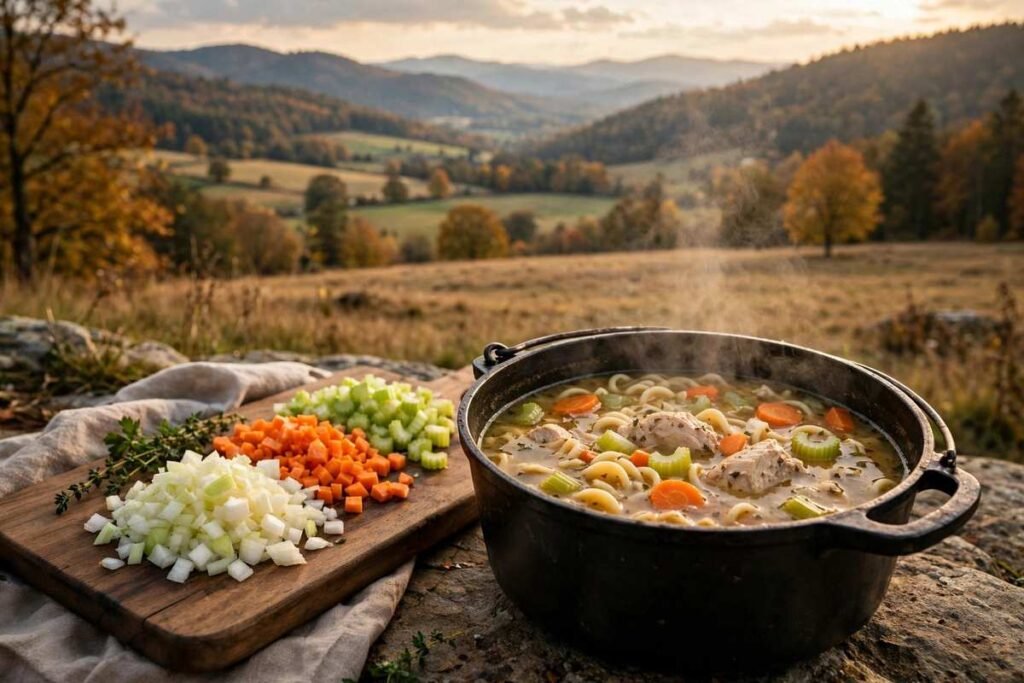
Yes. In the classic version of chicken noodle soup, onion is not an optional extra you toss in at the end. It is part of the foundation the whole soup is built on, right alongside carrot and celery.
That said, plenty of good cooks leave it out on purpose, and plenty of family recipes never had it in the first place. This guide walks through what onion does in the pot, how to use it well, when to skip it and what to reach for instead.
The Classic Base Is Mirepoix, and Onion Leads It
Traditional chicken noodle soup begins with mirepoix, the French aromatic base of onion, carrot, and celery cooked gently in fat. The classic ratio is two parts onion to one part each of carrot and celery, so onion is the biggest player of the three.
Recipes built for teaching kitchens follow the same pattern. The online cooking school Rouxbe, for example, builds its classic chicken noodle soup on a mirepoix of onion, celery and carrot, with the onion cut into dice before it ever meets the broth.
You will find the same trio at the start of braises, pot roasts and hearty stews. It works quietly under dishes where the main ingredient gets the attention, the same way it supports what meat is used for beef stew once the pot is simmering.
What Onion Actually Adds to the Pot
Raw onion is sharp and pungent, but heat changes it completely. As onion cooks, its harsh sulfur notes soften and its natural sugars come forward, giving the broth a gentle sweetness and a round, savory depth.
Onion also brings aroma. Much of what you smell when a pot of soup comes to the table is the base rather than the chicken, and onion does most of that work. Carrot adds sweetness and color, celery adds a fresh herbal edge, and onion ties the two together.
Take the onion out and the difference is easy to taste. The broth turns thinner and flatter, with the chicken flavor sitting on top instead of blending in. Extra salt cannot fix that gap, because what is missing is depth, not saltiness.
Onion also changes the feel of the soup. Diced small and simmered, it softens until it nearly disappears, and in doing so it gives the broth a little body. A soup built on the full base tastes silky rather than watery, even before the noodles go in.
How Much Onion Does a Pot Need?
For a standard pot built on about 8 cups of broth, one medium yellow onion is the usual amount. It is enough to season the whole pot without turning the soup into onion soup. Double batches and big stockpots take two, in line with the two parts onion ratio of the classic base.
More is not better here. A second onion in a small pot pushes the broth sweet and heavy, and onion starts to crowd out the chicken. If you are unsure, hold back a little, since a sweated base concentrates as it cooks and you can always finish with a few spring onion greens.
How to Use Onion in Chicken Noodle Soup
A yellow onion is the standard choice. It sits in the middle of the range, sweet enough once cooked and sturdy enough for a long simmer. White onion tastes a little sharper and milder, and sweet onions can push a delicate broth toward sugary.
Cut size depends on the job. For soup where the vegetables stay in the bowl, use a small dice of about 1/4 to 1/2 inch so the onion softens and nearly melts into the broth. For a stock you plan to strain, rough chunks or even a halved onion are fine, since the pieces come out later.
The step that matters most is sweating the base first. Cook the onion, carrot and celery in butter or oil over medium heat for about 5 to 8 minutes, until the onion turns soft and translucent. Keep the heat moderate, because heavy browning darkens the broth and changes the flavor from clean to roasted.
If you are making stock from a whole chicken or a carcass, onion goes in again at that stage, usually halved or quartered with the skin left on. The skin is an old kitchen trick, since it lends the finished stock a deeper golden color.
When People Leave the Onion Out
The most common reason is a low FODMAP diet, often followed for IBS. Onions are rich in fructans, a carbohydrate that many sensitive stomachs handle badly, so onion comes out of the pot during the elimination phase of the diet.
Taste is the second reason. Some people simply dislike onion, children can be picky about its texture, and a few home styles build the soup on chicken, noodles and herbs alone. A very clear, delicate broth is another case where cooks skip it, so nothing clouds the chicken flavor.
Quick versions play a part too. Many weeknight soups lean on a prepared stock and a rotisserie chicken, and some prepared stocks are made without onion in the first place, often for the same dietary reasons.
The Best Substitutes When You Skip It
Leek greens are the closest stand in. The dark green leaves cook down soft and sweet, much like onion, and they are the part used in low FODMAP cooking. Wash them well, since leeks trap grit between their layers, and save the white bulb part for another dish.
Shallot is the swap for people who want a gentler taste rather than a dietary fix. It is finer and sweeter than onion and melts quickly, so use a little more of it and dice it small. Note that shallot is still an allium and still high in fructans, so it does not solve the FODMAP problem.
Onion powder works when you want the flavor with no pieces at all, which helps with picky eaters. It is concentrated, so a small amount goes a long way, and it gives onion flavor without the body that fresh onion adds. It is also high in fructans, so it belongs with the taste swaps, not the low FODMAP ones.
For low FODMAP cooking, the clever trick is infused oil. Fructans dissolve in water but not in oil, so onion or garlic infused oil carries the aroma into the soup without the compounds that cause trouble. A handful of chives or spring onion greens stirred in at the end adds a fresh onion note on top.
A tiny pinch of asafoetida is another option borrowed from Indian cooking. Bloomed in hot oil at the start, the pungent spice cooks into a mellow flavor that reads as onion and garlic, and it is used in very small amounts in low FODMAP kitchens.
How the Choice Changes the Broth
With onion in the base, the broth tastes rounded and complete. You get sweetness at the front, savory depth in the middle, and a smell that fills the kitchen before the bowl reaches the table.
Without it, the soup is not ruined, but it is different. The chicken flavor stands alone, and the broth can taste watery even when it is well seasoned. Cooks who skip onion usually lean harder on good stock, fresh herbs, a squeeze of lemon and enough salt to lift what is there.
Substitutes land in between. Leek gives a softer, greener sweetness, and shallot feels refined and mild. Powder gives the onion note without the silky body that a slowly sweated fresh onion leaves behind.
If a finished pot tastes flat because the onion stayed out, you can still rescue it at the table. A drizzle of onion infused oil, a handful of chopped chives and a squeeze of lemon wake up a plain broth quickly. It will not be identical to the classic, but it will not taste unfinished either.
Frequently Asked Questions
Can I make chicken noodle soup with no onion at all?
Yes, and it will still be a pleasant soup, especially if your stock is rich. Build flavor with carrot, celery, garlic if you tolerate it, herbs and a squeeze of lemon at the end. Just expect a cleaner, lighter broth rather than the deep classic taste.
Which onion is best for chicken noodle soup?
A plain yellow onion is the reliable choice for most pots. It balances sweetness and strength, and it holds up through sweating and simmering. Sweet onions can make the broth too sugary, and red onion can tint the broth an odd color.
Should the onion be cooked before the broth goes in?
Yes, in almost every case. Sweating the diced onion in fat for a few minutes removes its raw bite and builds the base flavor. Dropping raw onion straight into broth gives a harsher taste and a less blended result.
Is onion powder an okay replacement in soup?
For flavor, yes, and it is handy when someone at the table dislikes pieces of onion. Use it sparingly, since it is concentrated, and know that it adds taste without the body of fresh onion. It is not a low FODMAP swap, because the fructans are still there.


Leave a Reply