
Here is the short answer. Start with about 1 teaspoon of sugar for a standard 28 ounce can of tomatoes, taste, and add a little more only if the sauce still bites back. Very acidic sauces may need up to 1 to 2 teaspoons per can. Anything beyond that and you are no longer balancing a sauce, you are sweetening it.
The goal is a sauce that tastes like ripe tomatoes, round and full, with no sharp edge. You should never be able to pick out sweetness itself. If a spoonful tastes sweet, the sugar has done too much and the tomatoes have lost.
The Short Answer: How Much Sugar Per Can
One teaspoon per 28-ounce can is where most experienced cooks start, and it works because canned tomatoes vary so much. Some cans are bright and gentle and only need half a teaspoon. Others, especially cheap crushed tomatoes and purees, are loaded with added citric acid for shelf life and can handle the full 1 to 2 teaspoons.
Scale by the pot, not the recipe card. A double batch with two cans starts at 2 teaspoons, added in two rounds of tasting instead of all at once. A small sauce from a 14-ounce can needs about half a teaspoon. Sugar is the last seasoning you adjust, after salt, because salt changes how acidic the sauce tastes too.
Brown sugar follows the same amounts. It adds a faint molasses depth along with the sweetness, which some cooks love in a long-cooked meat sauce and others find muddy in a fresh marinara. Honey works in the same range, but its floral flavor announces itself, so granulated or brown sugar is the safer default.
Why Sugar Goes Into Tomato Sauce at All
Sugar does not make spaghetti sauce sweet when it is used properly. It balances acidity. Tomatoes are naturally acidic, and that acid is part of their charm, but in a sauce it can dominate everything else and leave a harsh, almost metallic sharpness on the tongue.
It helps to know what sugar actually does in the pot. It does not neutralize the acid or change the pH of the sauce in any meaningful way. Instead, sweetness and sourness balance each other on your palate, so a small amount of sugar makes the same amount of acid taste milder and lets the tomato flavor come forward. Cooking guides that break down tomato types by acidity make the same point, noting that sweet, low acid tomatoes need no help while high-acid canned tomatoes usually benefit from a pinch.
Canned tomatoes are the main reason the sugar question exists. Fruit picked underripe, or packed with citric acid to preserve color, starts sharper than a ripe summer tomato. A long, slow simmer softens that edge on its own as water evaporates and the natural sugars concentrate, which is why a three-hour ragu rarely needs help and a twenty-minute weeknight sauce often does.
How to Add It: Taste, Stir, Wait
Add sugar near the end of cooking, not the beginning. Acidity changes as a sauce simmers, and sugar added in the first ten minutes is a guess you cannot take back. Let the sauce cook until it is nearly done, then taste a spoonful on its own and pay attention to the finish. A sharp, puckery edge that lingers is the signal.
Stir in half a teaspoon to a teaspoon, depending on your pot size. Then wait a full three to five minutes before tasting again. Sugar needs a moment to dissolve and settle into the sauce, and tasting too fast leads people to add a second spoonful the sauce never needed.
Repeat once if the edge is still there. Stop the moment the sauce tastes round rather than sharp, even if that happens before you reach the full teaspoon. Your tomatoes, your pot and your taste decide the final amount, and the range in this guide is a map, not a rule.
Two small habits make the tasting honest. Use a clean spoon for every taste, because a spoon that already carries sauce from the last round blurs the difference. And taste the sauce plain, straight from the pot, rather than over pasta. Pasta and cheese both soften acidity, so a sauce that seems fine on a noodle may still taste sharp in the bowl.
A Quick Guide by Tomato Type
Different tomatoes start at different acid levels, so let the can in your hand set your expectations before you begin.
Whole peeled tomatoes from a good brand usually sit in the middle. Start with the standard teaspoon per 28-ounce can and expect to land near it. Smooth passata tends to be gentler and often needs only half to one teaspoon for the same can size.
Budget crushed tomatoes and thin purees are the sharp end of the shelf, because they are the products most often packed with added citric acid. Plan on the full teaspoon, and do not be surprised if a second one earns its place after tasting.
Fresh tomatoes split by ripeness. A ripe, heavy, in-season tomato needs no sugar at all. A pale winter tomato from the supermarket behaves more like a canned one and may need half a teaspoon to a teaspoon before it tastes like itself.
When to Skip the Sugar Entirely
Plenty of sauces need no sugar at all, and adding it out of habit flattens them. Skip it when your tomatoes are naturally sweet. Genuine San Marzano tomatoes are the famous example, with a low-acid, rich flavor that most cooks leave completely alone. Good ripe fresh tomatoes in season belong in the same category.
Skip it when sweetness is already built into the pot. A soffritto of onion and carrot cooked slowly in olive oil brings its own gentle sugar to the sauce. Cream and vodka sauces round out acidity with fat, and sugar on top of that turns them cloying. A sauce that has simmered for hours has also earned its balance honestly.
The simplest test comes before the sugar bowl. Taste the finished sauce first. If it tastes balanced and tomato-forward, close the lid and serve it. Sugar is a correction, not an ingredient, and a sauce that is not broken does not need fixing.
Alternatives That Balance Acidity Without Sugar
A grated carrot is the classic Italian alternative. Finely grate one medium carrot into the onion at the start of cooking and let it melt into the base. It disappears completely, adds body, and leaves behind exactly the soft sweetness the sauce needed, with no refined sugar involved.
A pinch of baking soda takes the opposite approach, because it really does neutralize acid. Stir in a small pinch, no more than a quarter teaspoon for a standard pot, and watch the sauce foam briefly as the soda reacts. Use a light hand, since too much leaves a soapy, flat taste that is hard to rescue.
Butter is the quiet third option. A tablespoon of cold butter swirled in at the end rounds the edges of the sauce and softens acidity with fat instead of sweetness. It suits a simple marinara especially well, giving a glossy finish at the same time.
A Note for Meat Sauces
Everything above applies to a meat sauce too, with one extra caution. Browned meat, tomato paste cooked in the fat and a splash of wine all add depth that can hide acidity, so taste a meat sauce even more carefully before reaching for sugar. Many pots need only half the amount a plain tomato sauce would.
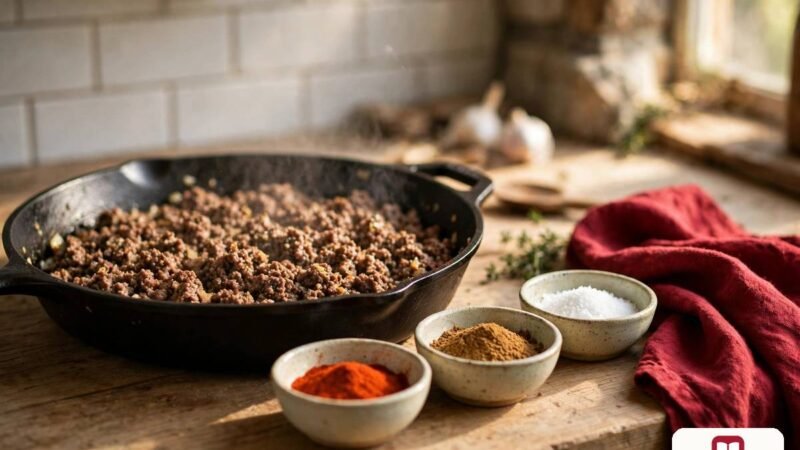
Seasoning the meat itself is a separate job with its own rules. Our guide to what to season ground beef with covers the salt, pepper and herb choices that keep the beef from tasting flat inside the sauce.
Frequently Asked Questions
Does sugar actually reduce the acidity in tomato sauce?
No. Sugar does not change the acid level of the sauce. It balances how sour the sauce tastes, which is why such a small amount works. A pinch of baking soda is the ingredient that actually neutralizes acid.
How much sugar should I add to a jar of store bought sauce?
Taste it first, because most jarred sauces are already sweetened, sometimes heavily. If a jar still tastes sharp, stir in half a teaspoon at a time and taste between additions. Many jars need none at all.
Can I fix a sauce after adding too much sugar?
Yes. Stir in more tomatoes to dilute it, add a small splash of red wine vinegar or lemon juice to push back, and check the salt. Simmering longer also helps the flavors merge so the sweetness stands out less.
Is putting sugar in spaghetti sauce authentic?
It is a long standing home cooking practice, especially with canned or underripe tomatoes, and plenty of Italian grandmothers defend their pinch. With sweet, ripe tomatoes the tradition is to leave it out. The tomatoes decide, not the rulebook.


Leave a Reply