
If you have ever wondered what meat is used for beef stew, the short answer is chuck. Most classic recipes, most butchers and most experienced home cooks land on the same cut, and that is not an accident. Beef stew is a long, slow braise, and the meat that shines in a braise is almost the opposite of the meat you would pick for a quick steak.
This guide explains why chuck earned its place at the top of the list. It also walks through the other cuts you will see suggested, with honest notes on what each one gives you and what it costs you. Finally, it covers the practical side: how big to cut the pieces, how to brown them well, and how long the pot actually needs before the meat turns tender.
Why stew meat starts out tough
A good stew cut comes from a muscle that worked hard during the animal’s life, like the shoulder or the leg. Working muscles are full of connective tissue, and that tissue is rich in a protein called collagen. Cooked quickly, collagen is chewy and unpleasant, which is why these cuts make terrible steaks.
Time changes everything. As the meat simmers gently in liquid, the collagen slowly melts into gelatin. Gelatin is what makes a stew feel rich and silky, and it keeps each piece of meat moist from the inside even as it cooks for hours. Lean, tender cuts have almost no collagen to melt, so a long cook only dries them out. That single fact explains every recommendation that follows.
Chuck, the classic choice
Chuck comes from the shoulder, and it hits a balance that no other common cut quite matches. It carries moderate marbling, the thin streaks of fat running through the meat, plus a generous amount of connective tissue woven between the muscles. Over two to three hours of gentle cooking, the fat renders and bastes the meat while the connective tissue melts into gelatin. The result is beef that pulls apart with a fork and tastes deeply beefy.
Chuck is also forgiving, which matters more than people admit. Because it has both fat and collagen in reserve, it tolerates small timing mistakes. An extra twenty minutes in the pot will not ruin it, and that is not true of leaner cuts. It is widely available, usually reasonably priced, and sold both as a whole roast and as ready cut cubes. Buying a whole chuck roast and cutting it yourself gives you the most even pieces, but good pre cut chuck is a perfectly sensible shortcut.
When you shop, look for a piece with visible white marbling spread through it. A chuck roast that looks uniformly dark red and lean has often been trimmed too hard, and it will give you a drier stew. A little variation between pieces is normal for chuck, since the shoulder is made of several muscles, and most home cooks find the mix of textures pleasant rather than a flaw.
The other cuts, honestly compared
Bottom round is the budget friendly option from the back leg. It is much leaner than chuck, with less marbling and less fat to protect it. It can make a good stew, but it asks for care: keep the simmer gentle, avoid letting it run long past tender, and expect a firmer, more sliceable texture rather than meat that falls apart. It is a fair choice when it is what the store has on offer, just not the most forgiving one.
Brisket is the chest cut famous from barbecue. It comes in two parts, and they behave very differently in a stew. The fatty point makes rich, juicy stew meat. The lean flat, which is the part most supermarkets stock, tends to cook up dry and stringy, with long ropy fibers. If you can find the point, brisket is a genuine contender. If only the flat is available, chuck will treat you better.
Short ribs are the luxury pick. They are richly marbled, remarkably consistent from piece to piece, and deeply flavored, especially cooked on the bone. In taste tests run by Serious Eats, short ribs produced an even beefier result than chuck, with chuck rated the best value for cost and convenience. The trade offs are price and fat: short ribs cost considerably more per pound, some of that price is bone weight, and you may want to skim extra fat from the finished stew.
Oxtail is the gelatin champion. Almost no cut carries more collagen, so an oxtail stew sets into the thickest, glossiest sauce of all. The honest downsides are real, though. You pay for a great deal of bone, the meat comes off in small pieces rather than hearty chunks, and it needs the longest cook of any cut here, often three and a half to four hours. Think of oxtail as its own wonderful dish rather than a straight swap for chuck.
Why the pack labeled stew meat is a gamble
Supermarket packs labeled simply stew meat are convenient, and sometimes they are exactly what you want. The catch is that the label does not name a cut. Those cubes are usually trimmings left over from several different parts of the animal, packed together. One cube might be chuck that turns tender at two hours, while its neighbor is round that needs longer, or a lean scrap that never softens at all. The stew cooks unevenly because the meat itself is uneven.
If you buy a pack, give it a quick sort on the cutting board. Look for pieces with marbling and set aside any that look very lean. Cut oversized pieces down and split any very small ones out if you can, so everything is close to the same size. Or simply buy a chuck roast and spend five minutes cubing it yourself. It is the cheapest upgrade a stew can get.
Cutting size and browning
Cut the meat into chunks of about one and a half to two inches. Smaller pieces cook through before their collagen has time to melt, and they dry out. Bigger pieces stay juicier inside and give you that satisfying, substantial bite. Whatever size you choose, keep the pieces as even as you can, because even pieces finish at the same time.
Browning is where the flavor base of the whole stew is built. Pat the meat dry with paper towels, since wet meat steams instead of searing. Get the pot properly hot, add a thin film of oil, and brown the meat in batches with space between the pieces. Crowding drops the temperature, the meat leaks juice, and you end up with gray cubes instead of a deep brown crust. Each batch needs only a few minutes per side. The dark crust and the browned bits left stuck to the pot, dissolved later by your cooking liquid, are worth every minute of patience.
How long to cook until it is tender
For chuck cut into two inch pieces, plan on two to three hours of gentle simmering on the stove, or about three hours in a low oven at 300°F. In a slow cooker, the same meat takes roughly seven to nine hours on low or four to five hours on high. Denser cuts run longer: allow up to three and a half hours for round and brisket, and around four for oxtail.
Two things help you judge the pot better than any clock. First, keep the liquid at a lazy simmer, never a rolling boil, because boiling tightens the meat and makes it stringy. Second, expect a confusing middle stage. Somewhere around the halfway mark, stew meat often tastes tougher than when it started, because the muscle fibers have tightened but the collagen has not melted yet. Do not panic and do not serve it early. Push a fork into a piece: when it slides in easily and the meat starts to give way, you are there. Start checking chuck at the two hour mark and give it more time in twenty minute stretches until it yields.
A word on seasoning
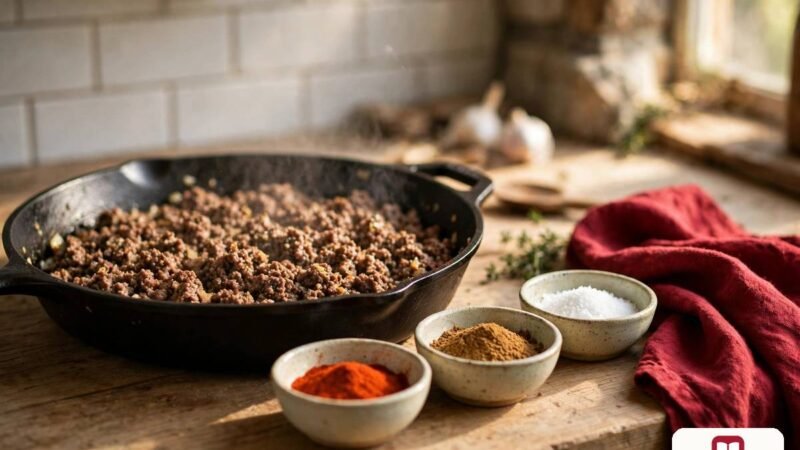
The cut does the heavy lifting, but seasoning decides whether the stew tastes flat or layered. Salt the meat before browning, then build flavor with onion, garlic, tomato paste and herbs as you go. If you cook ground beef dishes often, the spice combinations in our guide to what to season ground beef with are a useful starting point, since paprika, cumin, thyme and bay work just as well in a slow pot of stew. Taste again at the end, because a long braise softens saltiness, and most stews need a final adjustment before serving.
Frequently Asked Questions
Is the stew meat in a pack the same as chuck?
Not necessarily. Some packs are pure chuck, but many are mixed trimmings from several cuts, which is why they cook unevenly. The label rarely tells you. If the pack matters to you, ask at the meat counter what went into it, or buy a chuck roast and cube it yourself for a guaranteed result.
Can I use sirloin or another steak cut for stew?
You can, but it usually disappoints. Steak cuts are lean and low in collagen, so after two or three hours of simmering they turn dry and crumbly instead of tender. They are built for fast, hot cooking. If steak is all you have, add it near the end of cooking rather than braising it from the start.
How do I know when the beef is actually tender?
Ignore the clock and test the meat. A fork or the tip of a knife should slide into a piece with almost no resistance, and the piece should start to split apart when you press it. If it feels firm or bouncy, the collagen has not finished melting. Cover the pot and check again in twenty to thirty minutes.
Can I make beef stew ahead of time?
Yes, and it is one of the best make ahead meals there is. The flavor deepens overnight as the meat rests in the sauce, and chilled stew is easy to skim if you want to remove extra fat from the surface. Refrigerate it for up to three to four days, or freeze it for up to three months, and reheat it gently on the stove.
Leave a Reply