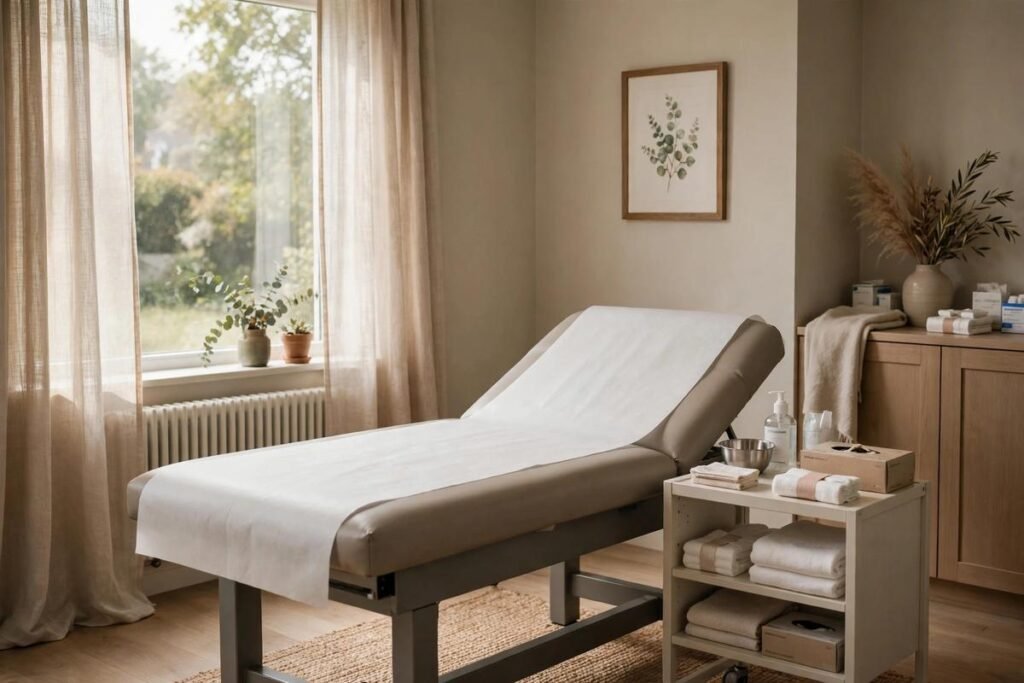
Knowing the order of a well woman visit takes most of the mystery out of it. The appointment follows a predictable pattern: paperwork and questions first, then a set of short physical checks, and a closing conversation about results and next steps. Nothing happens without being explained as it goes along, and you can pause or stop any part at any time.
This article walks through the visit itself, in the order it usually happens. If you want the wider picture first, including why this visit matters and how often each screening is usually recommended, our overview of what is a well-woman exam covers that background, while this page stays with the day itself.
Before You Arrive
Booking the visit is simple, and there is very little to prepare. It helps to know the date your last period started, because you will be asked. Bring a list of your medications, and note down any questions or changes you want to raise, such as a new lump, pain, or a change in your cycle.
You do not need to shave, and there is no special washing routine expected. Many providers suggest avoiding the heaviest day of your period if you can, because heavy bleeding can make it harder to see clearly and can affect a Pap sample. A normal day, including light period days, is usually fine.
Step 1: Check In and Paperwork
The visit starts at the front desk, the same as any other appointment. You will check in, confirm your insurance and contact details, and fill in or update health forms. These usually ask about past illnesses, surgeries, medications, allergies, and family history of conditions such as breast or colon cancer.
If you are seeing a new provider, your previous records may be requested or sent over, especially any past Pap results. This paperwork is not filler. Your answers shape which checks and tests apply to you at this visit, so it is worth filling in carefully rather than rushing through it.
Step 2: Vitals and Opening Measurements
Next, a nurse or medical assistant takes your basic measurements. Expect your height and weight, your blood pressure, and usually your temperature and pulse. These are quick and painless, and they give the provider a baseline for your general health on the day.
At some offices you will also be asked for a urine sample. This can be used to check for a urine infection and, when relevant, for pregnancy. Some visits include a finger prick blood test for blood sugar, though that depends on the practice and on what is due for you. Then you are shown to the exam room.
Step 3: The History Conversation
Before any physical exam, the provider sits down and talks with you. Alongside general questions about diet, exercise, alcohol, tobacco, sleep, and mood, there are questions specific to this visit. You will be asked about your periods, including how regular they are and whether they are painful, and about sexual activity in a straightforward, non judgmental way.
Contraception is a standard topic: what you use now, whether it suits you, and whether children are in your plans. The provider will also ask about any past sexually transmitted infections, whether you have had the HPV vaccine, any previous abnormal Pap results, and any family history of cancer. This is also your moment to raise anything on your own list, before the exam begins.
Step 4: Changing Into the Gown
After the conversation, you will usually be left alone to change into a gown, with a paper sheet for cover. You can stay covered until each part of the exam begins, and the gown is opened only where the provider needs to work. A nurse or chaperone is commonly present in the room during the physical exam.
This part feels awkward for almost everyone, and providers know it. You can ask for a support person to stay with you, and you can say at any point if you need a pause. The visit moves at a pace you agree to, not one set for you.
Step 5: The General and Breast Exam
The physical part often begins like a regular physical. The provider may listen to your heart and lungs with a stethoscope and feel your neck, where the thyroid sits. Then comes the clinical breast exam, done with you lying back and one arm raised above your head.
Using their fingertips with steady pressure, the provider checks the breast tissue and the area toward the armpit for lumps, thickening, or tenderness, and looks at the skin and nipples for changes. It takes a minute or two per side and should not hurt, though it can feel firm. Anything unusual is usually followed by imaging, such as a mammogram or ultrasound, arranged for another day rather than diagnosed on the spot.
Step 6: The Pelvic Exam, Part by Part
For the pelvic exam, you lie on your back, slide toward the end of the table, and rest your feet in supports called stirrups. There are three parts, and the provider should explain each one before and as it happens. The whole pelvic exam usually takes only a few minutes.
First comes an external look. The provider visually checks the vulva for irritation, sores, skin changes, or anything unusual. Second is the speculum exam. A closed speculum, a smooth instrument shaped a little like a duck bill, is inserted gently with lubricant and opened slightly so the provider can see the vagina and cervix. This can feel like pressure, and relaxing your muscles genuinely helps. Speculums come in sizes, and you can ask for a smaller one.
Third is the bimanual exam. The provider places one or two gloved, lubricated fingers inside the vagina and presses on your lower abdomen with the other hand. Between the two hands they can feel the size, shape, and position of your uterus and ovaries, and notice any tenderness. Then the speculum and gloves come off, and the physical exam is over.
Step 7: Tests Done on the Day Versus Tests Ordered
Some tests happen during the visit itself. If a Pap test or HPV test is due, the sample is collected during the speculum exam: a small soft brush gathers cells from the cervix, which takes seconds and can cause brief pressure or mild cramping. Swabs for sexually transmitted infections can be taken at the same time. Urine and any finger prick tests are also done on the day.
Other tests are ordered rather than performed in the room. Blood work, such as cholesterol, blood sugar, or thyroid levels, is usually drawn at a lab the same day or booked separately. Mammograms and bone density scans happen at imaging centers on their own appointments. UNC Health’s walkthrough of what to expect at your well-woman exam describes the same order of events, including how Pap and HPV results are explained afterwards rather than given on the spot.
Step 8: The Wrap Up Conversation
Once you are dressed, the provider goes over what was found and what happens next. You will hear which results arrive later and roughly when, what screenings are due next time, and whether anything needs a follow up appointment, a prescription, or a referral. This is a good moment for any questions you saved from the start of the visit.
The full appointment commonly runs between 30 and 60 minutes, and most of that is talking, paperwork, and waiting rather than examining. The physical exam portion itself is short, usually around 10 minutes when all steps are included. Knowing that split in advance makes the visit feel much more manageable.
What to Expect After You Leave
Most people feel completely normal afterwards and go straight back to work or home. After a Pap sample you might notice very light spotting for a day, which is common and usually nothing to worry about. Test results typically arrive within one to two weeks, by letter, phone call, or patient portal, depending on the practice.
If a result is abnormal or unclear, the provider’s office will explain the next step, which is often simply a repeat test sooner than usual or a closer look at a follow up visit. An abnormal result is common and rarely means cancer. What matters is keeping the follow up, because that is where the protection of the whole visit is completed.
Frequently Asked Questions
Does every well woman exam include a pelvic exam?
Not always. Whether a pelvic exam is part of your visit depends on your age, your symptoms, and which screenings are due. For a routine visit with no concerns, some providers discuss it with you first. You can also decline any part of the exam, and it is fine to ask what each part is for before agreeing.
How long does a well woman exam take in total?
Plan for 30 to 60 minutes at the office from check in to checkout. The physical exam itself is much shorter, usually around 10 minutes, with the rest of the time going to paperwork, measurements, conversation, and the closing discussion about results and next steps.
Will I get my Pap test results on the same day?
No. Pap and HPV samples are sent to a laboratory, so results take time, commonly one to two weeks. Your provider will explain at the visit how results will reach you and what happens if anything needs follow up, so you are not left guessing while you wait.
Can I ask the provider to stop during the exam?
Yes, at any point, for any reason. You can ask for a pause, a smaller speculum, a chaperone or support person in the room, or for the exam to stop entirely. Providers expect these requests and would rather you speak up than stay silent and uncomfortable.


Leave a Reply