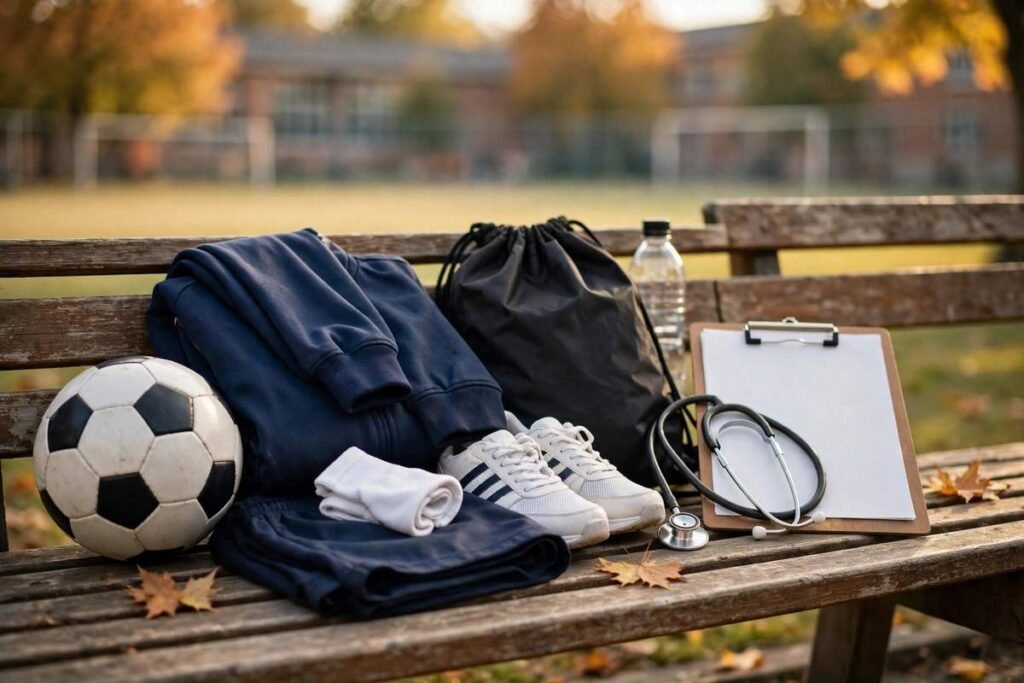
Every sports season starts with the same small piece of paperwork. Before the first practice, the school wants a signed form showing that a medical professional has checked the athlete and cleared them to play. That check is the sports physical, and parents ask the same simple question every year. How long does the last one stay valid?
The Short Answer: About One Year
For most schools and leagues, a sports physical remains valid for one year from the date of the exam. Many states and school districts require the exam to have been completed within the last 12 months, and some allow up to 13 months. Once that window closes, the athlete needs a new exam before they can practice or compete again. In plain terms, the date of the exam matters more than the season the athlete plans to play in, and once the accepted window has passed, a new exam is the safe assumption.
This matches the guidance aimed at families. KidsHealth explains that sports physicals are usually good for one year, although a fresh sports form may still need to be filled in for each season. The form and the exam are not quite the same thing, and schools often want updated paperwork even when the exam itself is still current.
There is a second pattern worth knowing. Some state athletic associations tie validity to the school year instead of the exact exam date. A common version accepts any physical dated on or after a cutoff in the spring, often around April or May, as covering the whole of the next school year. A physical done in June can then cover fall, winter and spring sports with a single visit.
Because the rule comes from your state association and your school district, not from one national law, the only version that counts is the one printed on your school form. Check the form, or call the school athletic office, before you assume last year’s exam still works.
Why the Validity Is Only One Year
A year is a long time in a young athlete’s body. Teenagers grow quickly, and height, weight, joints and fitness can all change a lot in twelve months. A heart or breathing issue that was not there last season can appear, and an old injury can heal badly or come back.
The yearly rhythm also matches how the risk works. The exam is built to catch the small number of conditions that could make sport dangerous, such as heart problems that show up during hard exercise, uncontrolled asthma, or a recent concussion that has not fully cleared. Reviewing that picture once a year keeps the information fresh enough to be useful.
Health changes during the year matter too. If an athlete has a concussion, surgery, a serious injury, or a new diagnosis after their physical, the school may require a fresh evaluation before they return to play, even if the old form has months left on it. The one year validity assumes nothing major has changed.
What the Exam Actually Covers
The formal name is the preparticipation physical evaluation, often shortened to PPE. It has two parts, and the first part matters more than most people expect.
The medical history is a detailed form, usually filled in at home with a parent’s help. It asks about illnesses in the family, asthma, diabetes, past hospitalizations and surgeries, allergies, and previous injuries including concussions and broken bones. It also asks whether the athlete has ever fainted, felt dizzy, had chest pain, or struggled to breathe during exercise, and it lists every medicine and supplement they take.
The physical exam itself is focused rather than full length. The clinician records height and weight, checks blood pressure and pulse, tests vision, and listens to the heart and lungs. They examine the abdomen, muscles, bones and joints, and usually check strength, flexibility and posture. The whole appointment is aimed at one question: is this athlete safe to take part in this sport?
Who can perform the exam depends on state rules. In most places a doctor, a nurse practitioner, or a physician assistant can complete it and sign the form, and some states add training requirements for whoever signs. Colleges and private leagues may set their own standards on top of the school rules, and sports camps often run their own checks as well. Some schools also hold group physical events, where athletes move between stations in the gym, each one staffed by a clinician covering one part of the exam. Those events are quick and cheap, but your own doctor knows your child’s history best, which is worth something when a borderline finding needs judgment.
How It Differs From an Annual Physical
A sports physical and an annual physical sound alike, and they do share some steps, but they are built for different jobs. The sports physical looks only at fitness to play. It does not cover vaccinations, development, mental health screening, or the wider health review that a proper yearly checkup includes.
Our guide to what is an annual physical walks through that full visit in detail, and it is the appointment that covers your child’s overall health. A sports physical does not replace it. Many doctors will happily do both in one visit if you say so when booking, so the sports form gets signed as part of the complete checkup rather than instead of it.
What to Bring to the Appointment
Bring the school’s sports physical form, since most schools will only accept their own version or the state version. Fill in the history section honestly and completely before you arrive, and ask both parents about family history if you can, especially any heart problems or early sudden deaths in the family.
Bring glasses or contact lenses if the athlete wears them, because vision is tested. A list of current medicines and supplements helps, including anything bought over the counter. If the athlete has seen a specialist for a heart, lung, bone or head injury issue, bringing those records or a clearance note can save a second trip.
What Can Hold Up Clearance
Most athletes are cleared on the spot. When clearance is delayed, it is usually for something fixable. A high blood pressure reading may simply need a recheck on a calmer day. Asthma that is not well controlled may need a medicine adjustment. A recent sprain might need a short course of physical therapy and a follow up look before contact practice is allowed.
Outright disqualification is rare, and it is narrower than families fear. A finding usually rules out one sport, not all sports. An athlete with repeated concussions might be told to leave football but stay free to play tennis. The goal of the exam is to keep athletes playing safely, not to keep them off the field, and most problems end with a treatment plan and a follow up visit rather than a ban.
How to Time It So One Exam Covers Everything
The practical trick is timing. Book the physical in late spring or early summer and, under either validity pattern, it usually covers every season of the coming school year. Book it in the middle of the year and it may expire awkwardly partway through a season.
It also pays to book early rather than the week before tryouts. Checking the date early gives families time to arrange the appointment and complete the paperwork before practices begin. Aim for at least six weeks before the season starts. If the exam turns up anything that needs a test, a referral or treatment, that gap gives you time to sort it out without the athlete missing practice. School based physical events and clinics fill up fast in August, so an early appointment with your own doctor is the calm option.
Frequently Asked Questions
Does one sports physical cover every sport in the same school year?
Usually yes. One valid exam normally covers all school sports played inside its validity window, so a single physical can clear an athlete for fall, winter and spring seasons. The school may still ask for a fresh permission or history form each season, even though the exam itself does not need repeating.
Can an annual physical count as a sports physical?
Often it can, if the visit covered the sports requirements and the doctor fills in and signs the school sports form during that appointment. The safe move is to tell the office when booking that you need the sports form completed, and take the form with you. A routine checkup done without the form usually cannot be converted afterwards.
What happens if the physical expires in the middle of a season?
Rules differ by state and district. In some places an athlete who was cleared on the first day of the season stays cleared until that season ends, even if the one year mark passes during it. In others, the athlete must renew as soon as it expires. Ask the school athletic office before the season starts, not after the form runs out.
How long does the appointment itself take?
The exam part usually takes around 15 to 30 minutes, with extra time for the history form and any vaccinations or extra checks if you combine it with an annual physical. Filling in the history form carefully at home beforehand makes the visit much quicker.

Leave a Reply